
Historic places provide a meaningful connection between the past and the people who experience it today. Preserving these sites also helps ensure that these stories remain accessible to future generations. By protecting historic places, we preserve not only physical spaces, but the memories, lessons and heritage they represent.
As the United States celebrated its 250th anniversary, renewed attention was given to historic places at risk of being lost. In 2026, the World Monuments Fund (WMF) introduced Irreplaceable America, an initiative highlighting 10 U.S. heritage sites facing urgent preservation needs.
Protecting Irreplaceable Places
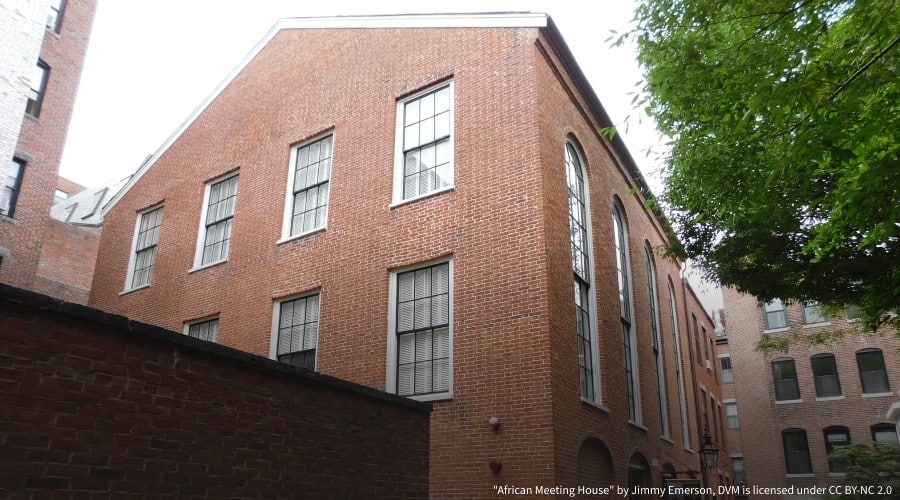
The sites highlighted through Irreplaceable America reflect different chapters of the nation’s cultural and historical legacy. One example is Boston’s African Meeting House, a historic center of Black community life that played an important role in the abolitionist movement.
The initiative also includes the Mission Churches of Acoma and Laguna Pueblos in New Mexico, sites in Dayton, OH connected to the Wright brothers, Dallas City Hall and historic neighborhoods throughout New Orleans, LA. Together, these places illustrate how preservation efforts support a wide range of local histories and cultural traditions across centuries and geographies.
Protecting these sites also creates opportunities to tell a more complete story about the people and communities connected to them. Physical monuments offer another way to bring those histories into public view. In 2025, a statue honoring Rosa Parks at the Alabama Capitol was dedicated in Montgomery, giving visitors another opportunity to engage with her legacy and contributions to the civil rights movement.
That work goes beyond the preservation of physical places. For example, the National Park Foundation’s (NPF) Inclusive Storytelling program supports projects that help bring greater visibility to the histories and perspectives represented across the National Park System.
Historic preservation can make the past feel tangible in ways a textbook, photo or video cannot. For a young person experiencing these places, being immersed in the spaces where people lived, worked or struggled, or where important moments unfolded, can make history feel personal.
Robert F. Smith’s Commitment to Historical Preservation
Historical preservation has also been a longstanding focus of Robert F. Smith’s philanthropic work, particularly his efforts related to Black history and the Civil Rights Movement.
Through Fund II Foundation, where he serves as Founding Director and President, Smith has worked with the National Park Foundation to preserve places tied to important chapters of Black history. In 2019, he and Fund II Foundation partnered with the NPF to preserve Dr. Martin Luther King, Jr.’s birth home as well as the Atlanta, GA home where he later lived with Coretta Scott King and their family.
That work has also supported sites connected to Carter G. Woodson, Harriet Tubman and Frederick Douglass, along with the Selma to Montgomery National Historic Trail and the Freedom Riders National Monument.
These efforts underscore the importance of keeping history visible and accessible. Preserving historic places alongside the stories they hold gives future generations a deeper understanding of the people, communities and events that have shaped the country.
Learn more about Smith and his philanthropy by following him on YouTube and LinkedIn.