
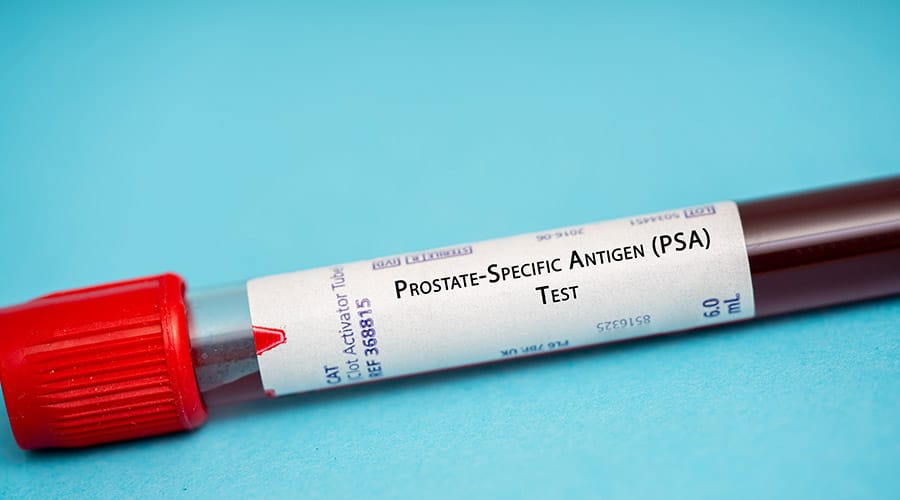
Every year, there are about 333,830 new cases of prostate cancer in the U.S., according to the American Cancer Society’s 2026 estimates. From 2014 to 2022, the incidence rate increased 3% per year, partly due to improved screening methods. While these numbers are concerning, advances in healthcare technology are helping detect prostate cancer earlier through screenings like Prostate-Specific Antigen (PSA) testing.
A PSA test is a blood test primarily used for prostate cancer screening. It measures the amount of prostate-specific antigen in the blood. Healthcare professionals can use the results of these tests to help determine if a patient is at high risk of developing prostate cancer.
In one example, PSA testing helped diagnose prostate cancer in four brothers in England. All were diagnosed around the same time after one brother discovered he had the disease. This story underscores how genetic factors can increase a person’s risk. It also shows how PSA testing, even without symptoms, plays a critical role in early detection.
PSA Testing and Early Detection of Prostate Cancer
Catching prostate cancer early is a critical factor in improving survival rates. Early and regular screenings enable healthcare professionals to monitor and diagnose patients while the disease is still localized and treatable.
PSA testing and prostate cancer screenings are important for a number of reasons:
- Prostate cancer can develop without symptoms, so screenings like PSA testing can help healthcare professionals identify risks early.
- Advances in healthcare technology have made prostate cancer screenings more accurate.
- Patients diagnosed with localized prostate cancer have a nearly 100% five-year survival rate.
Patients at higher risk should consider regular screenings to detect changes in PSA levels. High PSA levels do not necessarily mean a patient has prostate cancer, but they may prompt additional testing, which can be life-saving.
The Mount Sinai Robert F. Smith Prostate Cancer Screening Unit
In 2018, Robert F. Smith donated $3.8 million to fund the Mount Sinai Robert F. Smith Mobile Prostate Cancer Screening Unit, bringing screenings into communities across New York City. To date, the mobile unit has screened more than 10,000 people at community events and screening sites.
The mobile unit is equipped with screening technology such as:
- PSA testing
- ExactVu Micro-Ultrasound System
- EchoNous Bladder Scanner
- Genomic testing
By bringing life-saving technology to local communities, the mobile unit is helping improve health outcomes for at-risk populations. In addition to funding the screening unit, Smith has made a philanthropic gift to support the Prostate Cancer Foundation’s development of a genetics-based test for early detection. In 2022, he was honored with the Prostate Cancer Foundation’s Visionary Award for his dedication to prostate cancer research and prevention.
Learn more about how Smith supports prostate cancer research and awareness with his philanthropy on YouTube and LinkedIn.