
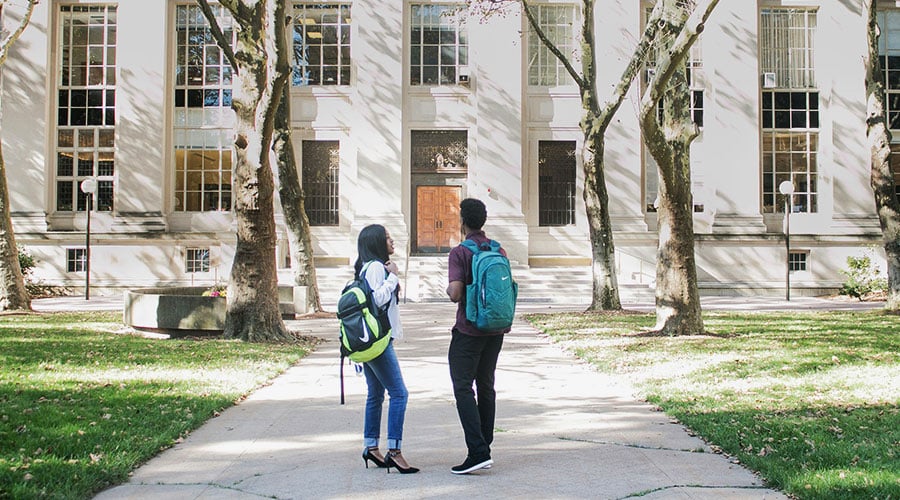
Philanthropy has long played a pivotal role in making higher education more affordable and accessible. Visionary philanthropists like Johns Hopkins and Mary McLeod Bethune created opportunities for students to pursue higher education at institutions that still bear their names.
The role of philanthropy in college affordability is even more important today. According to 2026 data from the Education Data Initiative, U.S. student loan debt now exceeds $1.8 trillion. To help reduce students’ reliance on loans, many philanthropists and organizations offer scholarships, grants and student support programs. In 2025, the Council for Advancement and Support of Education (CASE) estimated that the total voluntary support for U.S. higher education was $78.8 billion.
How Higher Education Utilizes Philanthropic Donations
In addition to estimating how much voluntary support higher education institutions receive, CASE provides data on how those funds are used. In its 2025 Insights on Voluntary Support of Education (United States) Key Findings, CASE noted three defining themes in higher education philanthropy:
- Donor confidence in higher education remains strong.
- Giving is becoming more concentrated among fewer donors.
- More donors are prioritizing gifts with immediate, purpose-driven impact.
The report also found that 81% of higher education donations were designated for specific purposes, including:
- Current Operations (Restricted): 53.2%
- Current Operations (Unrestricted): 6.2%
- Endowment Income (Restricted): 27.8%
- Property, Equipment and Buildings: 10.3%
These contributions help institutions maintain day-to-day operations, improve campus facilities, modernize equipment and expand student resources. Together, these investments help ensure students have the support and environment they need to succeed academically and professionally, ultimately changing lives.
The Importance of Individual Philanthropy in Higher Education
Another valuable insight from the CASE 2025 insight report highlighted the vital role philanthropists play in supporting college affordability. In fact, in the 2025 fiscal year, philanthropic gifts from individual donors increased while gifts from foundations declined.
There have been many notable gifts from individuals to higher education programs and directly to students. They support college affordability in many ways, all aimed at helping students prepare to succeed in their professional career paths.
Johns Hopkins Tuition-Free Student Agreement
Made possible in part by a $1.8 billion gift from alumnus Michael Bloomberg, Johns Hopkins University announced in 2025 that undergraduate students from families earning up to $200,000 annually would qualify for free tuition. This initiative is expected to benefit students from more than 85% of U.S. households.
This type of philanthropic support continues the legacy of philanthropist Johns Hopkins. In 1876, he left a $7 million bequest that helped establish the university and a hospital. At the time, it was the biggest philanthropic gift in the U.S.
Tuskegee’s Anonymous Donation to Support STEM Students
In 2024, Tuskegee University announced that it received an anonymous gift of $20 million to support efforts to strengthen academic programs and improve university infrastructure. The funds also expanded STEM education and applied research opportunities, created endowed leadership positions for faculty and established scholarships.
Robert F. Smith’s Historic 2019 Morehouse College Gift
In 2019, Smith pledged to eliminate the student loan debt for the entire Morehouse College graduating class. He later extended the gift to include the debt incurred by their guardians on their behalf. The gift enabled students to make life choices that they may not have been able to pursue otherwise — like going to graduate school, launching a business or starting a family. It has also inspired some of them to pay it forward to future generations by giving back to their own communities.
Learn more about how Smith supports students and helps make college more affordable with his philanthropy on YouTube and LinkedIn.